ARP-G8R
26 million arpeggios, under $10 to build.
A production-ready ESP32 arpeggiator proving hardware does not have to be expensive to be powerful: custom PCB, real-time audio synthesis, and an interface designed for musicians.
Client
ARP-G8R
Role
Hardware, firmware, product interface
Timeline
Prototype and pre-production design
Stack
ESP32 / C++ / Mozzi / FreeRTOS / KiCad
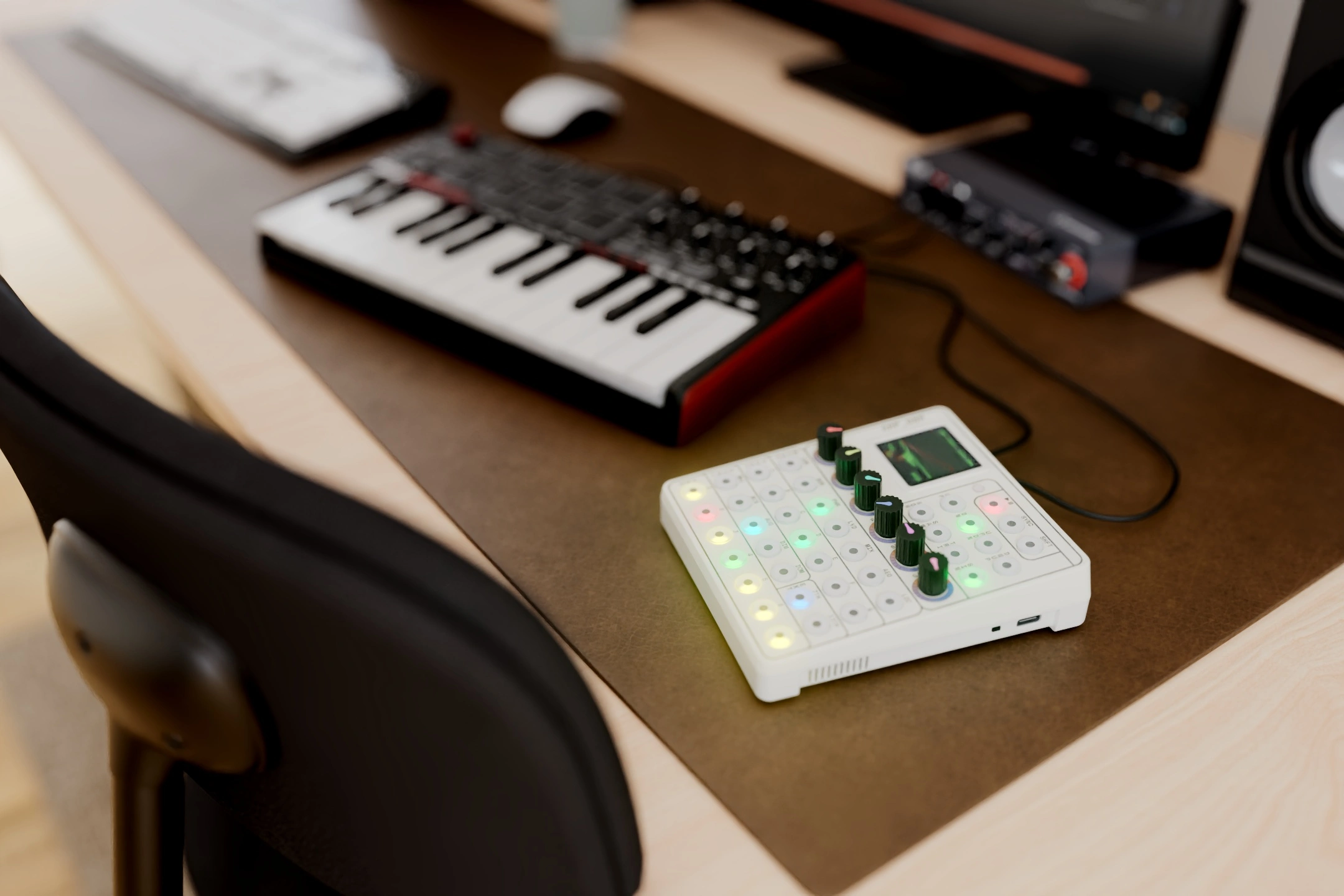
Hardware
Hardware synthesis should not have to cost a fortune.
The arpeggiator market is split between expensive studio gear and limited budget options. ARP-G8R uses smart component choices to deliver professional-grade functionality at hobbyist prices.
26M+
unique arpeggios
Every combination of mode, direction, chord, and variation.
39
buttons via ADC
Resistor ladder design keeps BOM costs minimal.
<$10
manufacturing cost
Production-ready at hobbyist price points.
7
musical modes
Full modal coverage from Ionian to Locrian.
Clever engineering over premium components
Rather than cutting features to hit a price point, ARP-G8R uses resistor ladders instead of expensive multiplexers, a custom PCB, I2S DAC audio output, a 128x128 OLED display, and 40 NeoPixel LEDs for immediate feedback.
Every component was designed with live performance in mind. The result is a device that is as direct to play as it is affordable to build.
Engineering
Hardware meets interface.
The core work connected PCB design, control layout, firmware architecture, and musical interaction into one physical product.
Resistor ladder input
39 buttons read through two ADC channels using precision resistor networks.
Custom PCB design
Purpose-built board routing with grounded audio, power, and grouped control signals.
I2S DAC output
Clean synthesis at 44.1kHz without relying on the ESP32's built-in DAC limits.
OLED display
A realtime piano-roll visualization keeps state visible during performance.
40 NeoPixel LEDs
Every button gets visual feedback for mode, preset, and parameter state.
Logical controls
Directions, waveforms, modes, roots, chords, and presets each get dedicated clusters.
Dual-core realtime audio
The ESP32’s dual-core architecture isolates audio synthesis from control logic. Mozzi handles waveform generation, envelope shaping, and output mixing at 44.1kHz.
FreeRTOS manages button scanning, parameter updates, and display refresh separately, which keeps input responsive even during complex parameter changes.
A SPIFFS preset system stores seven presets across power cycles, with queued switching at arpeggio boundaries to avoid jarring performance changes.
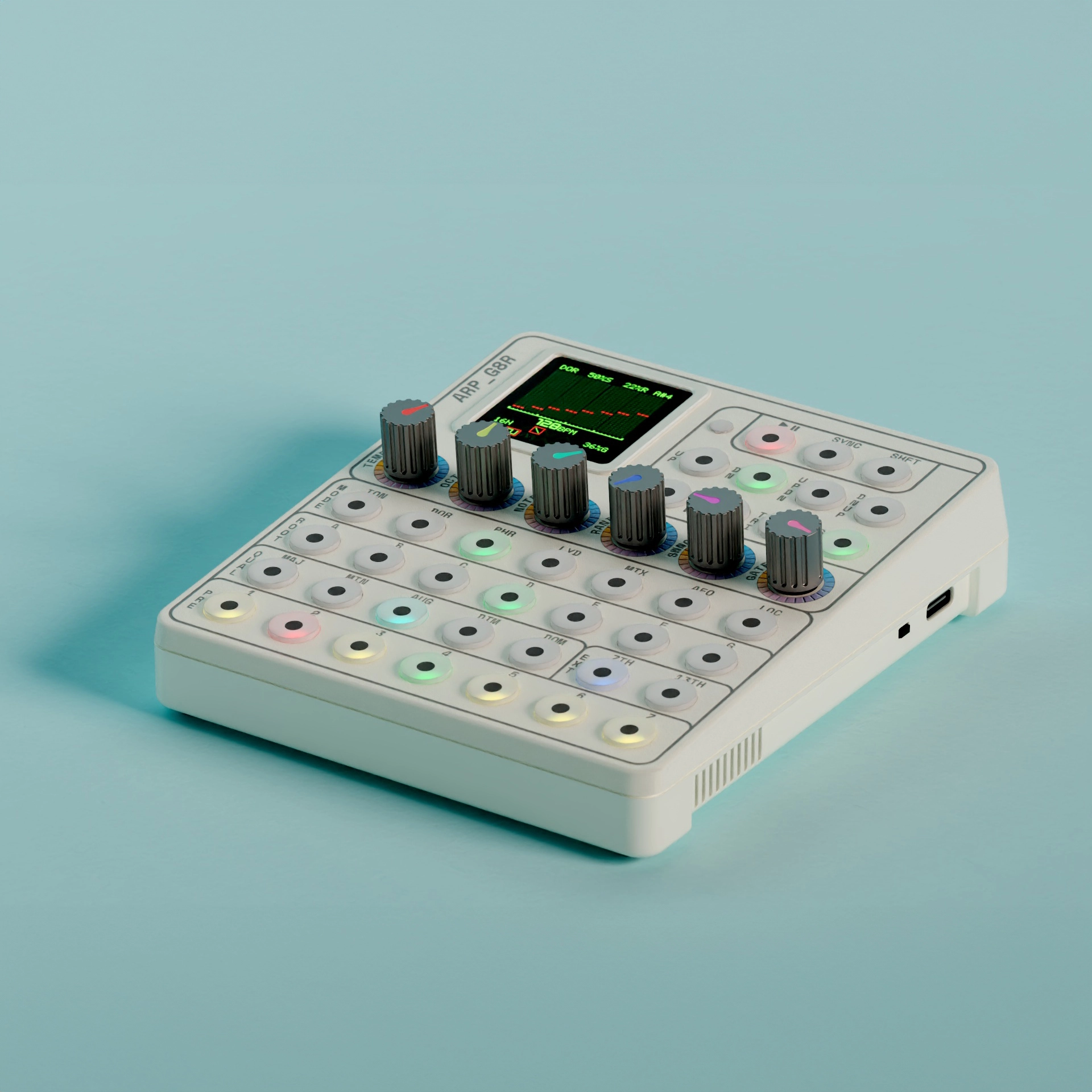
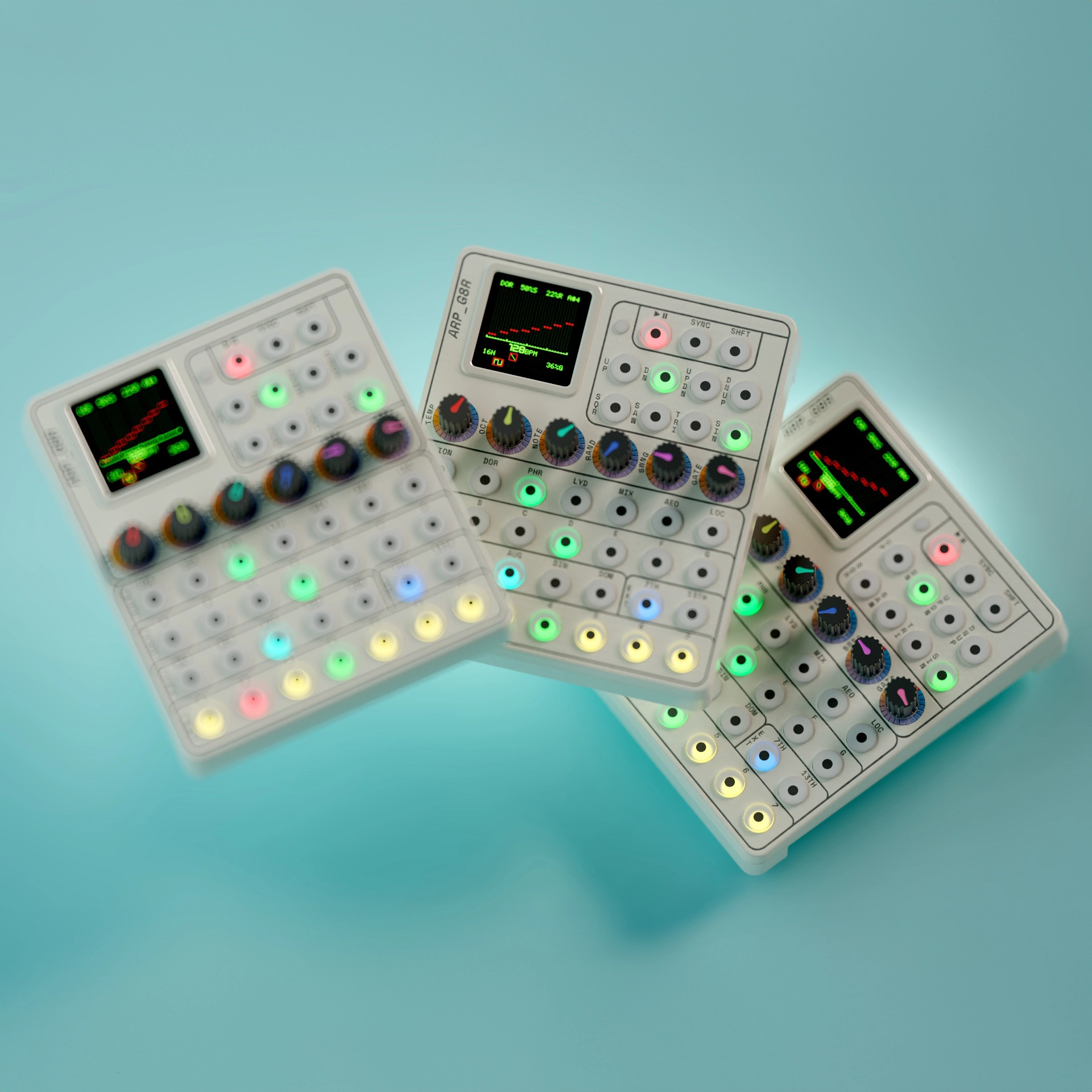
Product renders
Pre-production design.
Rendered visualizations helped lock the production-ready enclosure and interface layout before fabrication.
Interactive demo
Try the ARP-G8R in your browser.
The same arpeggiator engine that powers the hardware is available here with modes, chord qualities, and realtime parameter controls.
The takeaway
Great hardware starts with clever constraints.
ARP-G8R proves that limitation can create better engineering. By prioritizing smart component choices over expensive parts, the project became a professional-grade arpeggiator that could actually be manufactured affordably.
Tech stack: ESP32 / C++ / Mozzi 2.0 / FreeRTOS / KiCad
Scale: 26M+ arpeggios / 39 buttons / 40 LEDs / <$10 BOM